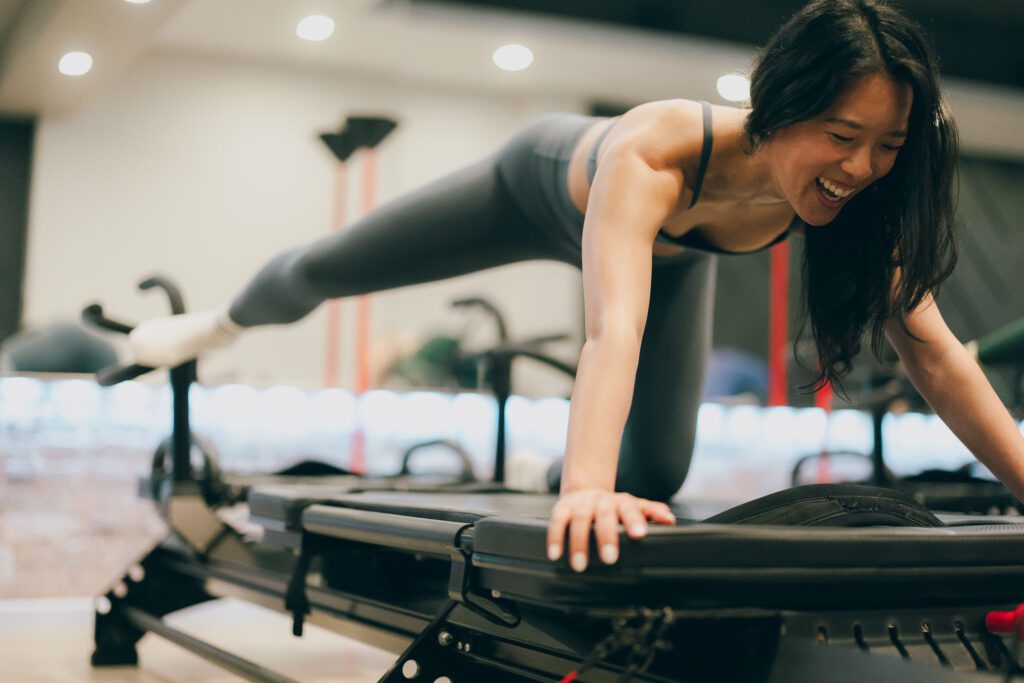
Many people focus heavily on training the muscles they can see in the mirror, such as the abdominals or quadriceps. However, some of the most important muscles in the body are located on the backside, an area commonly referred to as the posterior chain.
The posterior chain includes the glutes, hamstrings, and muscles of the back. These muscles play a critical role in posture, stability, and overall strength. When the posterior chain is strong, it helps support proper movement patterns and reduces strain on the spine and joints.
Lagree workouts are particularly effective at strengthening the posterior chain because they emphasize slow, controlled resistance training and full-body muscle engagement.
What Is the Posterior Chain?
The posterior chain refers to a group of muscles located along the back side of the body. These muscles work together to support movement, maintain posture, and generate power during activities such as walking, running, and lifting.
Key muscles of the posterior chain include:
- Gluteus maximus and gluteus medius
- Hamstrings
- Erector spinae (lower back muscles)
- Latissimus dorsi (upper back muscles)
- Smaller stabilizing muscles around the hips and spine
When these muscles are strong and functioning properly, they help maintain balance between the front and back of the body.
Why Posterior Chain Strength Matters
In modern lifestyles, many people spend long hours sitting at desks, driving, or looking down at screens. These habits can weaken the posterior chain over time.
When the muscles of the back side of the body become weak, the body may compensate by placing more stress on the lower back, knees, or hips.
A strong posterior chain helps:
- Improve posture
- Support the spine
- Reduce lower back discomfort
- Enhance athletic performance
- Improve balance and stability
Strengthening these muscles is essential for both fitness and long-term mobility.
Glute Strength and Hip Stability
The glutes are the largest and most powerful muscles in the body. They play a major role in stabilizing the hips and supporting movements such as walking, running, and climbing stairs.
Lagree workouts include a variety of exercises that target the glutes from multiple angles. Because the Megaformer carriage moves during many exercises, the glutes must work continuously to maintain stability.
This constant activation helps strengthen both the larger glute muscles and the smaller stabilizing muscles around the hips.
Improved glute strength can lead to better hip alignment and more efficient movement patterns.
Hamstring Engagement
The hamstrings are located on the back of the thighs and work closely with the glutes to extend the hips and stabilize the knees.
In many traditional workouts, the hamstrings are undertrained compared to the quadriceps. This imbalance can contribute to poor movement mechanics and increased injury risk.
Lagree exercises often place the hamstrings under sustained tension through slow, controlled movement. This approach strengthens the hamstrings while improving muscular endurance.
Strong hamstrings help support knee stability and reduce strain on surrounding joints.
Strengthening the Back Muscles
The muscles of the back are also part of the posterior chain and play an essential role in maintaining posture and spinal stability.
Lagree workouts include exercises that activate both the upper and lower back. These movements encourage proper alignment and strengthen the muscles responsible for supporting the spine.
A stronger back helps counteract the effects of prolonged sitting and poor posture.
Over time, improved back strength can lead to better posture and reduced tension in the neck and shoulders.
The Role of the Core
Although the core is often associated with abdominal muscles, it also includes muscles that support the spine and connect the upper and lower body.
Lagree workouts emphasize continuous core engagement during nearly every exercise. This core activation helps stabilize the spine while the posterior chain muscles generate movement.
When the core and posterior chain work together, they create a strong foundation for movement.
This coordination improves balance, posture, and overall body control.
Slow Movement Creates Deeper Muscle Engagement
One of the key reasons Lagree workouts are effective for strengthening the posterior chain is the emphasis on slow movement and time under tension.
By moving slowly, the muscles must remain engaged throughout the entire exercise rather than relying on momentum.
This continuous engagement forces the glutes, hamstrings, and back muscles to work harder for longer periods of time.
The result is improved muscular endurance and more balanced strength development.
Supporting Everyday Movement
A strong posterior chain supports many of the movements people perform every day. Activities such as standing up from a chair, lifting objects, climbing stairs, and maintaining posture all rely on these muscles.
When the posterior chain is strong, the body moves more efficiently and with less strain on the joints.
This functional strength helps support both athletic performance and everyday mobility.
Balanced Strength for Long-Term Health
Strengthening the posterior chain is essential for maintaining balance between the front and back of the body. When muscles on both sides are strong and coordinated, the body can move with greater stability and control.
Lagree workouts are designed to develop this balanced strength by engaging multiple muscle groups simultaneously.
Over time, this balanced approach can improve posture, reduce injury risk, and support long-term physical health.
Experience Lagree at Inspire Seattle
At Inspire Seattle, Lagree classes are designed to strengthen the entire body while emphasizing the muscles that support posture, stability, and movement.
Each 40-minute class challenges the glutes, hamstrings, back, and core through slow, controlled exercises. Ballard and Queen Anne use Megaformers, while West Seattle uses Xformers.
Whether your goal is to build strength, improve posture, or enhance overall fitness, Lagree training can help create a stronger and more balanced body.
Book your first class and experience the benefits of Lagree training for yourself.