When people talk about moving well, the conversation usually revolves around strength or flexibility. While both are important, there’s another component of fitness that often gets overlooked—and it’s one of the biggest predictors of how well your body functions over time.
That component is mobility.
Mobility affects nearly every movement you make throughout the day, from bending down to tie your shoes to reaching into an overhead cabinet or getting out of your car. It’s also one of the biggest factors in preventing injuries and maintaining an active lifestyle as you age.
At Inspire Seattle, we believe that improving mobility isn’t just about moving farther—it’s about moving better.
Mobility and Flexibility Are Not the Same Thing
Although people often use the terms interchangeably, mobility and flexibility are very different.
Flexibility refers to the ability of a muscle to lengthen.
Mobility refers to the ability of a joint to move through its full range of motion with strength and control.
For example, you might be flexible enough to touch your toes, but if you can’t squat comfortably, reach overhead without compensating, or maintain good balance while moving, your mobility may still be limited.
True mobility combines flexibility, strength, stability, and coordination.
Why Mobility Declines
Mobility naturally changes over time, but aging isn’t the only reason people lose it.
Common causes include:
- Sitting for long periods
- Repetitive movement patterns
- Previous injuries
- Lack of strength training
- Poor posture
- Limited daily movement
Over time, joints become less mobile and surrounding muscles become less capable of supporting healthy movement.
Fortunately, mobility can often be improved through regular movement and targeted strength training.
Better Mobility Makes Everyday Life Easier
Think about all the movements you perform throughout the day.
You squat to pick something up.
You rotate while backing out of the driveway.
You reach overhead for dishes.
You climb stairs.
You carry groceries.
Every one of these activities requires healthy joint mobility.
When mobility is limited, the body often compensates by placing additional stress on nearby muscles and joints. This can eventually contribute to discomfort, inefficient movement, and unnecessary strain.
The Connection Between Mobility and Strength
One of the biggest misconceptions is that stretching alone improves mobility.
While stretching can increase flexibility, lasting mobility also requires strength.
Imagine trying to stand on one leg. It’s not enough for your muscles to be flexible—you also need strength and stability to maintain balance.
Strength training through a full range of motion teaches your body to control movement rather than simply allowing it.
That’s why the combination of strength and mobility produces better long-term results than flexibility training alone.
Healthy Joints Support Healthy Movement
Every joint in your body has a specific range of motion it was designed to perform.
When joints lose mobility, nearby joints often compensate.
For example:
- Limited hip mobility can increase stress on the knees.
- Poor ankle mobility can affect balance.
- Restricted shoulder mobility can contribute to neck discomfort.
- Limited thoracic spine mobility may lead to lower back strain.
Improving mobility helps distribute movement more evenly throughout the body, allowing joints to work as they were designed.
Why Controlled Movement Is So Effective
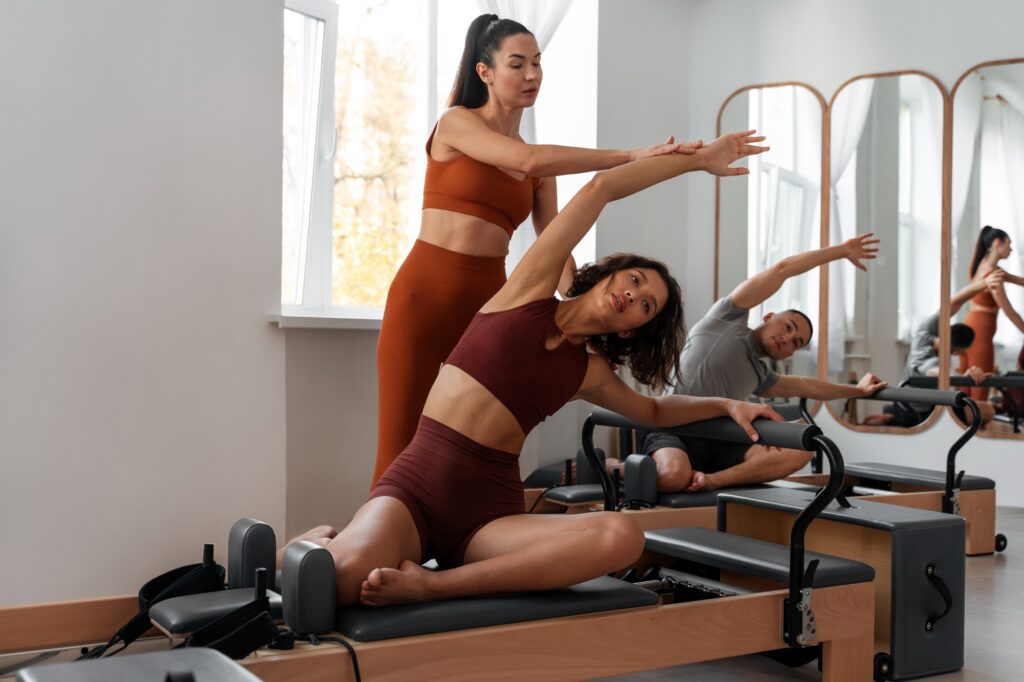
One of the reasons Lagree is so effective for improving mobility is its emphasis on slow, controlled movement.
Rather than relying on momentum, participants move deliberately through each exercise while maintaining continuous muscle engagement.
This approach allows muscles to strengthen throughout their available range of motion while simultaneously improving stability.
The result is not only increased mobility, but also better control of that mobility.
Mobility Supports Injury Prevention
Many common injuries occur when the body is forced to move beyond its available range of motion or compensate for restrictions elsewhere.
Improving mobility helps reduce these compensation patterns.
When joints move more freely and muscles become stronger throughout their range of motion, the body becomes better equipped to handle everyday demands.
This doesn’t eliminate injury risk, but it helps create a stronger, more resilient body.
How Lagree Improves Mobility
Every Lagree workout incorporates movements that challenge flexibility, strength, and stability at the same time.
Throughout each 40-minute class, participants move through controlled ranges of motion while activating multiple muscle groups simultaneously.
The Megaformer also introduces an element of instability, requiring the body to continuously adjust and maintain proper alignment.
Over time, many participants notice improvements in:
- Hip mobility
- Shoulder mobility
- Core stability
- Balance
- Coordination
- Overall movement quality
These improvements often carry over into daily life, making routine activities feel smoother and more comfortable.
Mobility Is an Investment in Your Future
Maintaining mobility isn’t just about today’s workout—it’s about preserving your ability to move confidently for decades to come.
Whether your goal is hiking Washington’s beautiful trails, playing pickleball, traveling comfortably, or simply keeping up with your children or grandchildren, healthy mobility makes those experiences more enjoyable.
By combining strength with controlled movement, you can help your body stay capable, resilient, and ready for whatever life brings.
Move Better at Inspire Seattle
At Inspire Seattle, our Lagree classes are designed to strengthen your body while improving the mobility and stability needed for lifelong movement.
Each class combines resistance training, core engagement, balance, and controlled movement into an efficient 40-minute workout that supports both performance and long-term health.
Whether you’re just beginning your fitness journey or looking to improve how your body moves every day, Lagree offers a smart, sustainable approach to building strength and mobility together.
Visit InspireSeattle.com to schedule your first class and discover how improving your mobility can transform the way you move, feel, and live.