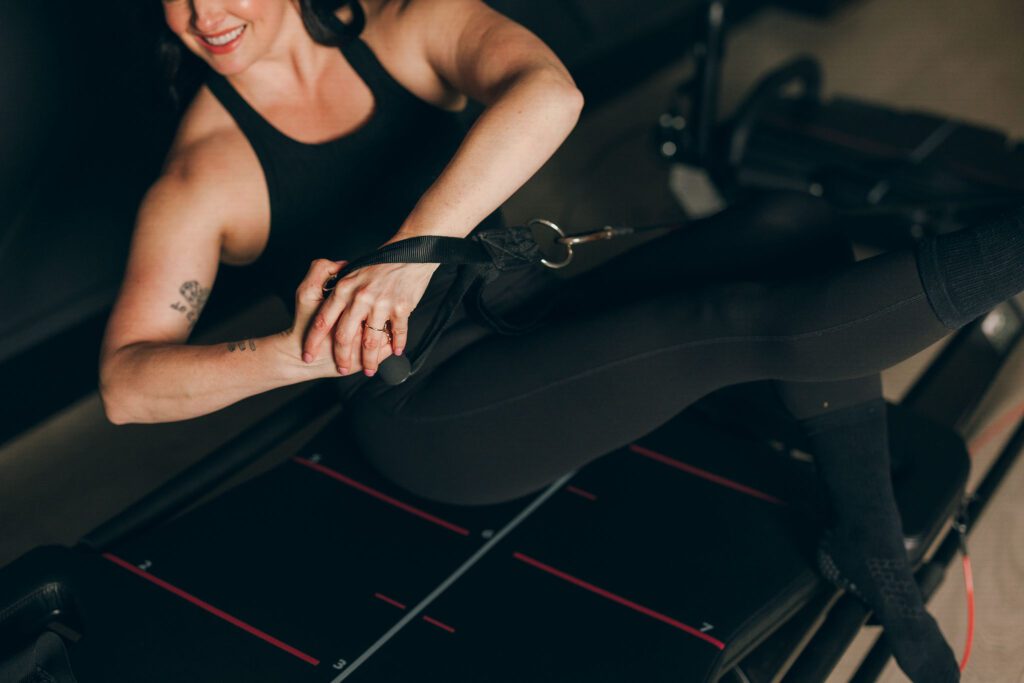
If you’ve taken a Lagree class, you’ve probably noticed that the movements are intentionally performed very slowly. At first, this may feel unusual compared to many traditional workouts where exercises are performed quickly or explosively.
However, the slow tempo used in Lagree workouts is not accidental. It is a core principle of the Lagree Method and plays a major role in building strength, endurance, and stability.
Slow movement forces muscles to remain engaged throughout the entire exercise, creating a training stimulus that is both challenging and highly effective.
Why Speed Reduces Muscle Engagement
In many traditional workouts, exercises are performed quickly. While this may increase the number of repetitions completed in a short amount of time, it often allows momentum to assist the movement.
When momentum is involved, the muscles may not be doing the full amount of work required to move the body or the weight. Instead, the body uses speed and inertia to carry the movement forward.
Slow movement removes this assistance.
By slowing down each repetition, the muscles must generate and control the force required to perform the exercise. This increases muscular demand and forces the body to maintain constant control throughout the movement.
Time Under Tension
One of the most important benefits of slow movement is increased time under tension. This refers to the amount of time a muscle remains actively engaged during an exercise.
When movements are slow and controlled, muscles stay under tension for longer periods of time. This extended engagement challenges muscle fibers more deeply and encourages greater strength development.
In Lagree workouts, many exercises are performed over several seconds for both the pushing and returning phases of the movement. This controlled tempo keeps the muscles activated throughout the entire exercise.
The longer muscles remain under tension, the harder they must work to maintain the movement.
Recruiting More Muscle Fibers
Another benefit of slow strength training is increased muscle fiber recruitment. As muscles begin to fatigue during a slow movement, the body recruits additional muscle fibers to maintain control.
This recruitment process allows the body to engage more muscle tissue than it might during faster movements.
Because Lagree exercises emphasize slow tempo and sustained effort, they encourage the activation of both slow-twitch and fast-twitch muscle fibers.
Slow-twitch fibers are responsible for endurance and stability, while fast-twitch fibers generate power and strength. Training both types of fibers contributes to balanced muscle development.
Improved Stability and Control
Slow movement also improves stability by giving the body more time to respond to changes in balance and alignment.
Many Lagree exercises are performed on the Megaformer, where the moving carriage creates a dynamic training environment. As the platform moves, stabilizing muscles must activate to maintain control.
Performing these movements slowly allows the body to develop stronger neuromuscular connections. Over time, this improves coordination and body awareness.
This increased control can translate into better movement patterns during everyday activities.
Protecting the Joints
Another advantage of slow resistance training is that it reduces stress on the joints. Fast or explosive movements can sometimes place sudden force on the knees, hips, or shoulders.
Slow movement distributes that force more gradually across the muscles and joints.
Because Lagree exercises are performed with controlled tempo and low impact, participants can challenge their muscles without the pounding associated with jumping or sprinting.
This makes Lagree an excellent option for individuals who want a challenging workout while protecting their joints.
Building Muscular Endurance
Muscular endurance is the ability of muscles to sustain effort over time. Many sports and daily activities require muscles to work continuously rather than in short bursts.
Slow strength training naturally improves muscular endurance because muscles must remain engaged for longer periods during each exercise.
Lagree workouts often involve holding positions or moving slowly through extended ranges of motion. These sustained efforts encourage muscles to adapt by becoming more resistant to fatigue.
As endurance improves, participants often notice they can maintain control and stability for longer periods during workouts.
Enhancing the Mind-Muscle Connection
The slow tempo used in Lagree workouts also strengthens the mind-muscle connection. This refers to the ability to consciously activate and control specific muscles during exercise.
When movements are performed quickly, it can be difficult to focus on which muscles are working. Slowing down the movement allows participants to concentrate on proper alignment and muscle engagement.
This awareness helps improve exercise technique and ensures that the intended muscles are doing the work.
Over time, a stronger mind-muscle connection leads to more efficient training and better overall results.
Strength That Supports Everyday Life
The strength gained from slow resistance training is highly functional. Rather than training muscles only for explosive power, Lagree workouts develop the type of strength that supports daily movement.
Activities such as lifting objects, climbing stairs, maintaining posture, and stabilizing the body during movement all benefit from improved muscular control and endurance.
Because Lagree emphasizes slow, controlled movement, it helps build strength that translates directly into everyday activities.
Experience Slow Strength Training at Inspire Seattle
At Inspire Seattle, Lagree classes are designed to deliver efficient, full-body workouts through slow, controlled resistance training. Each 40-minute class challenges your muscles while improving stability, endurance, and strength.
Our instructors guide participants through movements that emphasize proper form, controlled tempo, and continuous muscle engagement.
Whether you are new to Lagree or looking to elevate your fitness routine, slow strength training can help you build a stronger, more resilient body.
Book your first class and experience the benefits of the Lagree Method for yourself.